

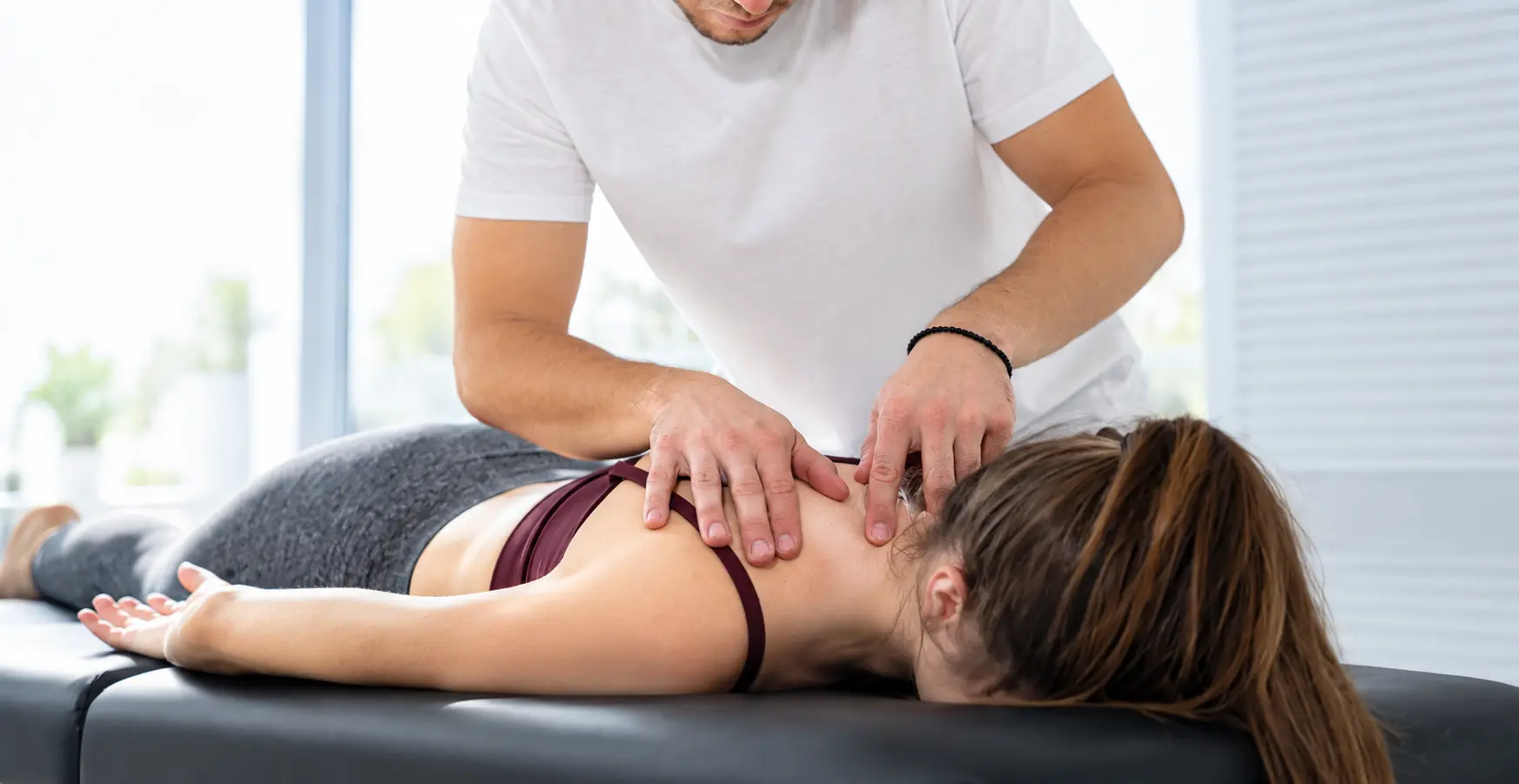
If you’ve been dealing with stubborn muscle tension that regular massage just doesn’t touch, deep tissue massage might be exactly what your body is asking for. It’s one of the most requested treatments at our Nepean, Ottawa clinic, and also one of the most misunderstood.
Quick answer: Deep tissue massage uses firm, sustained pressure to work on deeper layers of muscle and the connective tissue around them (fascia). Unlike relaxation massage, it focuses on chronic tension and problem areas to ease pain, reduce stiffness, and help improve mobility. Sessions are performed by a Registered Massage Therapist (RMT) and typically run around 60 minutes.
What Is Deep Tissue Massage?
Deep tissue massage uses slow, deliberate strokes and firm pressure to work on the deeper layers of muscle, tendons, and fascia. Where relaxation massage works mostly on surface tension, deep tissue work focuses on the tight, tender spots (the “knots” you feel) and on chronic tightness that has built up over months or years.
Most people book it for a specific problem, such as a stiff neck, a sore low back, or an old injury, rather than for general relaxation.
Deep Tissue vs. Relaxation Massage: What’s the Difference?
Deep tissue massage is often compared to Swedish massage, the classic lighter-pressure style most people picture when they think “massage.” At Harmony, this lighter style is offered as Relaxation Massage. The core difference is pressure and purpose.
Deep Tissue Massage vs Relaxation Massage
– Pressure
Deep Tissue Massage: Firm, targeted
Relaxation Massage: Light to medium
– Goal
Deep Tissue Massage: Ease chronic tension, stiffness, and pain
Relaxation Massage: Reduce stress, promote calm
– Best for
Deep Tissue Massage: Chronic pain, old injuries, postural strain
Relaxation Massage: General stress relief
– Sensation
Deep Tissue Massage: Can be intense, sometimes mildly uncomfortable
Relaxation Massage: Gentle and relaxing throughout
– Typical use
Deep Tissue Massage: Low back pain, tight shoulders, desk-job tension
Relaxation Massage: Self-care, sleep, stress
Both have a place. Many clients alternate between them depending on what their body needs that month.
Who Benefits Most From Deep Tissue Massage?
- Desk workers and drivers with chronic neck, shoulder, or upper-back tightness from prolonged sitting
- Active people and athletes managing tight hamstrings, calves, or hips
- People with an old injury where stiffness or scar tissue has limited their mobility
- Anyone with postural habits that contribute to recurring pain patterns
- People with pelvic or low back pain: tension in the hips, glutes, and low back often goes hand in hand with pelvic pain. Deep tissue work in these areas can complement pelvic health physiotherapy.
- Clients in physiotherapy for sports or orthopaedic injuries, where massage supports the rehab plan (sports and orthopaedic physiotherapy)
What to Expect During Your Appointment
- Brief intake: Your RMT asks about pain areas, history, and your goals for the session.
- Positioning: You’ll be comfortably positioned on the treatment table and draped appropriately throughout.
- Gradual pressure: Your therapist starts lighter and works into deeper pressure as the tissue warms up, checking in with you as they go.
- Targeted work: Focused attention on the areas causing you trouble, not a generic full-body routine.
- Aftercare guidance: Stretching or movement suggestions to help the benefits last.
Sessions typically run around 60 minutes, depending on how many areas need attention.
How to Prepare for Your Deep Tissue Massage
- Arrive hydrated and fed. A light snack and some water beforehand help you feel your best during and after your session.
- Skip heavy lotion or oil. Clean, product-free skin helps your therapist work effectively.
- Think about your problem areas ahead of time. That way your session time goes toward treatment, not figuring out where to start.
- Plan an easy rest of the day if you can. Gentle movement afterward usually feels better than a hard workout.
Is Deep Tissue Massage Painful?
It can feel intense in tight or sensitive areas, but it should never be sharply painful. A good RMT works within your tolerance and adjusts pressure based on your feedback in real time.
Afterward, mild soreness for 24–48 hours is normal, much like how muscles feel after a workout. Once it settles, many people notice better range of motion and looser, less tense muscles. Light movement and gentle stretching can help. Sharp pain, or soreness that lasts beyond a couple of days, is not normal and should be reported to your therapist.
How Often Should You Get a Deep Tissue Massage?
For chronic tension, many clients start with weekly or biweekly sessions and space them out as symptoms improve. For general maintenance, once a month is a common baseline. Your RMT will recommend a frequency based on what’s going on in your body, not a one-size-fits-all schedule.
Who Should Avoid or Modify Deep Tissue Massage?
Deep tissue massage is safe for most people, but it isn’t right for everyone. Your RMT will screen for the following before treatment, and you should always mention relevant health conditions when you book. Deep pressure is generally avoided or modified for:
- Open wounds, fresh scars, or active skin infections: pressure can slow healing or spread infection.
- Blood clots or clotting disorders, including deep vein thrombosis (DVT): deep pressure can be dangerous.
- Blood-thinning medication: you may bruise more easily, so pressure is adjusted.
- Recent fractures, surgery, or unhealed injuries: the area needs medical clearance first.
- Severe osteoporosis: fragile bones are at higher risk from firm pressure.
- Varicose veins: firm pressure directly over them is avoided.
- Reduced sensation (for example, from diabetes-related nerve changes): you may not be able to give accurate feedback on pressure.
- Recent or current cancer treatment: check with your oncology team first.
- Fever or contagious illness: postpone until you’ve recovered.
- Pregnancy: deep pressure is modified, especially on the legs, where clot risk is higher. Our prenatal massage is designed for this stage.
This list isn’t exhaustive. If you have a chronic health condition or aren’t sure deep tissue massage is right for you, mention it when booking or check with your doctor first.
Deep Tissue Massage at Harmony Physiotherapy & Wellness
At Harmony in Nepean, Ottawa, deep tissue massage is part of a connected, whole-body approach to care. Because we’re also a physiotherapy and pelvic health clinic, your massage therapist can coordinate with your physiotherapist (with your consent), so every part of your treatment plan is pulling in the same direction.
Explore our full range of massage therapy services, including deep tissue, sports, prenatal, postpartum, and myofascial release. No referral is needed to book.
Frequently Asked Questions
Who should not get a deep tissue massage? Deep pressure is generally avoided or modified for people with open wounds, blood clots or clotting disorders, recent fractures or surgery, severe osteoporosis, or a fever or contagious illness. It’s also adjusted during pregnancy. Always mention relevant health conditions when booking.
What happens to your body after a deep tissue massage? Mild soreness for 24–48 hours is normal, similar to post-workout soreness. Many people also notice better range of motion and looser muscles once it settles.
How long does a deep tissue massage session take? Most sessions run around 60 minutes, depending on how many areas need focused work.
Does deep tissue massage help with lower back pain? It can. Low back pain is one of the most common reasons clients book. Targeted pressure can ease tension in the surrounding muscles and help you move more comfortably. For persistent back or pelvic pain, pairing massage with physiotherapy often works best.
Can I get a deep tissue massage if I’m pregnant? Pressure and positioning are modified during pregnancy, especially on the legs. Ask about our prenatal massage, which uses pregnancy-safe positioning and pressure.
Is deep tissue massage covered by insurance? Massage by a Registered Massage Therapist is covered under many extended health plans in Ontario. Some plans require a doctor’s note for reimbursement, so check your plan’s details.
Do I need a doctor’s referral to book? No referral is needed to book massage therapy at Harmony Physiotherapy & Wellness.
Book Your Deep Tissue Massage in Nepean, Ottawa
Contact Harmony Physiotherapy & Wellness in Nepean, Ottawa to schedule your deep tissue massage appointment.