

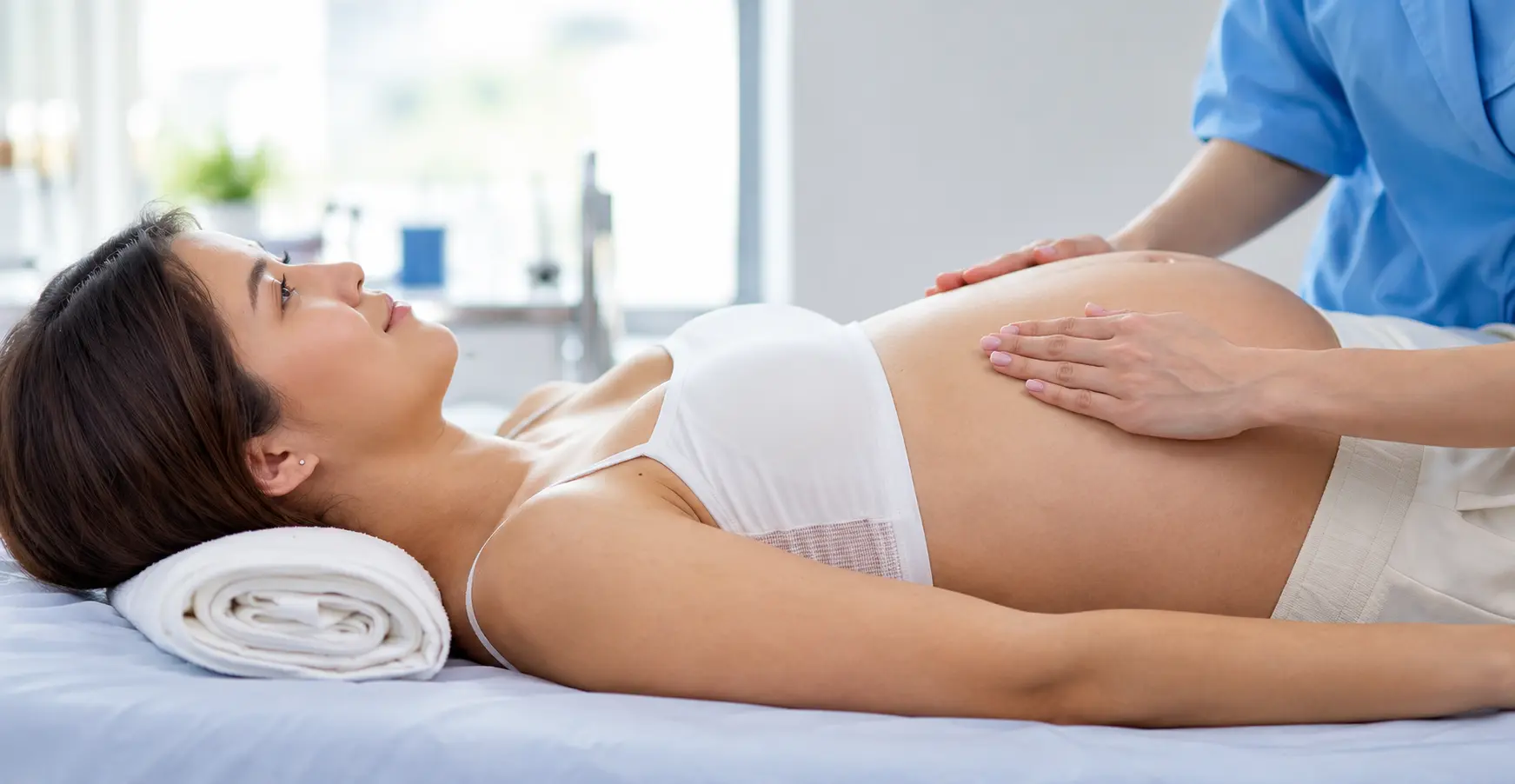
Between feeding, holding, and carrying a newborn, your body is doing a different kind of hard work in the weeks and months after birth, often while it’s still healing from pregnancy and delivery. Postpartum massage is one of the most overlooked parts of new-parent recovery, and it’s something we regularly recommend to clients in Nepean, Ottawa.
Quick answer: Postpartum massage is massage therapy tailored to your recovery after childbirth. It eases muscle tension from feeding and carrying positions and supports healing from pregnancy and delivery-related strain. You can usually start once your Registered Massage Therapist (RMT) confirms it suits your recovery stage. For many people that is within the first few weeks, depending on how you delivered.
What Is Postpartum Massage?
Postpartum massage addresses the specific physical toll of pregnancy and childbirth. That includes postural strain from breastfeeding or bottle-feeding, tight shoulders and upper back from carrying and rocking a baby, core and pelvic changes, and fatigue-related tension. It’s adapted to where you are in recovery: gentle and supportive in the early weeks, progressing as your body heals.
Benefits of Postpartum Massage
- Eases neck, shoulder, and upper back tension from feeding and holding positions
- Supports circulation, which may help with general swelling and stiffness
- Addresses postural strain that builds from constant lifting, carrying, and rocking
- Gives you dedicated time for physical and mental recovery during a demanding stage
- Complements pelvic floor and core recovery when paired with postpartum physiotherapy
When Can I Start Postpartum Massage?
Timing depends on your delivery and how your recovery is progressing:
- Vaginal delivery without complications: Many clients can begin general (non-abdominal) massage within the first couple of weeks, once they feel comfortable.
- C-section delivery: Work over or near the incision waits until it has healed, often around 4–6 weeks. General massage elsewhere on the body may start sooner.
- Tearing or episiotomy: Massage near the perineum waits until the area has healed, but general massage elsewhere can often begin earlier. If you have pelvic floor or perineal concerns, our pelvic health physiotherapists can assess them directly.
Your RMT will ask about your delivery and any concerns before your first session, and adjust the plan. When in doubt, check with your doctor or midwife.
When to wait and call your care provider first
Hold off on massage and contact your doctor or midwife if you notice:
- Pain, warmth, redness, or swelling in one calf or leg (massage should never be done over a possible blood clot)
- Fever or chills
- Redness, warmth, or discharge around a C-section incision or stitches
- Heavy bleeding, or bleeding that suddenly increases
- New shortness of breath or chest pain (call 911)
What to Expect at Your Appointment
- Recovery-focused intake: Your therapist asks about your delivery, timeline, and current symptoms. Feeding-related tension is a common focus.
- Comfortable positioning: Side-lying with extra pillows is common in the early weeks, so you don’t need to lie on a healing incision or on tender, full breasts. Positioning is adjusted to your comfort and any restrictions.
- Targeted work: Usually the shoulders, upper back, neck, and hips, where new-parent postural strain concentrates.
- Realistic pacing: Sessions can be scheduled around feeding times, and pressure builds gradually as your body allows.
What Is the 3-3-3 Rule for Postpartum Recovery?
The 3-3-3 rule is an informal guideline some people use to set realistic expectations for early recovery. One common version suggests roughly 3 days mostly resting in bed, 3 weeks resting around the house, and 3 months easing back into normal activity. You may also see similar versions, such as the 5-5-5 rule.
It isn’t a medical protocol, and “resting” doesn’t mean staying still. Short, gentle walks are usually encouraged early on, especially after a C-section, to support circulation. Follow your own provider’s advice. The real value of the rule is the reminder that healing after birth takes months, not weeks.
Massage can follow the same arc: very gentle, restorative touch in the early days, then more targeted work on postural tension as you become more mobile.
The Harmony Approach: Massage and Pelvic Health Physiotherapy, Together
Massage eases muscle tension and helps you feel more comfortable, but it doesn’t replace core and pelvic floor rehabilitation. At Harmony, those two kinds of care don’t have to happen in separate silos.
With your consent, our Registered Massage Therapists and pelvic health physiotherapists take a collaborative approach to your care, sharing what they notice so your recovery plan stays connected. If your RMT notices signs of abdominal separation (diastasis recti), leaking, heaviness, or pelvic pain, they can connect you with our pelvic health team for an assessment. Many of our postpartum massage clients also see our physiotherapists to rebuild core strength and pelvic floor function.
Recovery isn’t only physical. If the early months feel overwhelming, our counselling team is here to support your mental health too.
For a broader look at recovery timelines, see Harmony’s Postpartum Recovery Road Map. You can also explore our massage therapy services or postpartum physiotherapy.
Frequently Asked Questions
How soon after birth can I get a massage? Many clients can begin general massage within the first couple of weeks after an uncomplicated vaginal delivery. After a C-section or tearing, work near the healing area waits longer, though massage elsewhere on the body may start sooner. Always confirm timing with your RMT and care provider.
What is the 3-3-3 rule for postpartum recovery? It’s an informal guideline: roughly 3 days resting in bed, 3 weeks resting around the house, and 3 months easing back into normal activity. It isn’t a medical rule, and gentle movement is still encouraged, but it’s a helpful reminder that healing takes time.
Can postpartum massage help with breastfeeding-related neck and shoulder pain? Yes. This is one of the most common reasons new parents book. Repetitive feeding positions create predictable tension patterns that respond well to targeted massage.
Is postpartum massage different from regular massage? Yes. It’s adapted to your recovery stage, delivery type, and any healing tissue, with positioning and pressure adjusted to match.
Should I do postpartum massage or postpartum physiotherapy first? They serve different purposes and often work well together. Massage addresses muscle tension and comfort; physiotherapy addresses core and pelvic floor rehabilitation. Many clients do both.
Is postpartum massage covered by insurance? Many extended health plans cover massage by a Registered Massage Therapist. Some plans require a doctor’s note to reimburse it, so check your coverage before your visit.
Do you offer direct billing? Yes, we direct bill to most major insurers. Ask our front desk when you book.
Can I bring my baby to my appointment? Yes, babies are welcome, and you can pause to feed if needed.
Do I need a referral to book a postpartum massage? No referral is needed to book massage therapy at Harmony Physiotherapy & Wellness. If your insurance plan requires a doctor’s note for reimbursement, you’ll need to get that separately.
Book Your Postpartum Massage in Nepean, Ottawa
Contact Harmony Physiotherapy & Wellness in Nepean, Ottawa to schedule your postpartum massage appointment.