

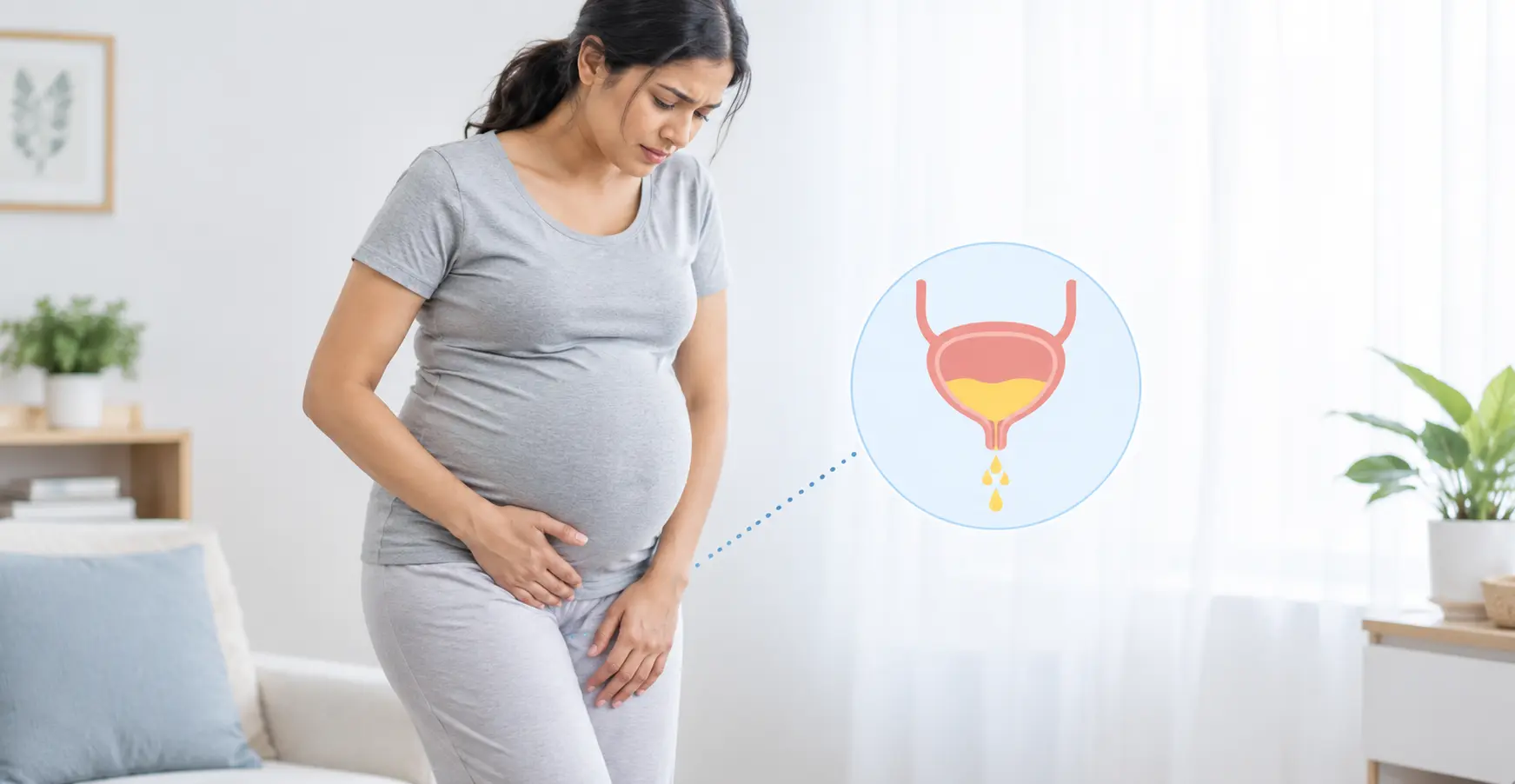
A little leak when you cough, sneeze, laugh, or get up from a chair can catch you off guard in the second trimester. It’s common, and it can feel embarrassing. But common doesn’t mean you just have to put up with it. Leakage in pregnancy is very treatable, and starting now can help you through the rest of your pregnancy and recovery after birth.
Urine leakage in the second trimester (weeks 13–27) is usually caused by the growing uterus pressing on your bladder, hormonal changes, and a pelvic floor that’s under more load than before. Pelvic floor exercises done with the right technique are the most effective first step, and a pelvic health physiotherapist can make sure you’re doing them correctly.
Is it urine or amniotic fluid? It can be hard to tell at home. If you notice a gush, or a steady trickle of watery fluid you can’t stop, contact your doctor, midwife, or hospital’s labour and birth unit right away. Don’t wait to see if it has a colour or smell.
Is Urine Leakage Normal in the Second Trimester?
It’s common, not normal and it often becomes more noticeable as pregnancy goes on. And, it’s worth mentioning to your provider or a pelvic health physiotherapist, especially if it’s new, getting worse, or changing how you move, exercise, or go about your day.
Why Does Leakage Happen in the Second Trimester?
- Pelvic floor load: your pelvic floor muscles support your bladder and help keep it closed. As your baby and uterus grow, these muscles carry more weight and have to respond faster when pressure rises.
- Pressure on the bladder: the growing uterus sits on and around your bladder, so it holds less and fills up faster.
- Hormonal changes: pregnancy hormones soften connective tissue throughout the body, including the tissues that support the bladder and urethra.
- Coordination, not just strength: leakage doesn’t always mean your pelvic floor is weak. Some people have muscles that are tense and struggle to relax and contract on time. This is why a proper assessment matters.
- Constipation: straining on the toilet adds extra load to the pelvic floor.
Which Type of Leakage Do You Have?
Stress Leakage
When it happens: Coughing, sneezing, laughing, lifting, jumping, standing up.
What’s going on: Pressure in your belly beats the pelvic floor’s ability to hold.
What usually helps: Pelvic floor exercises and timing them with effort.
Urge Leakage
When it happens: A sudden, strong need to go that’s hard to put off.
What’s going on: The bladder signals urgently, sometimes with irritation or infection.
What usually helps: Bladder habits, avoiding irritants, ruling out infection.
Many people have a bit of both. Burning, pain, fever, or blood in your urine along with urgency can mean a urinary tract infection, which needs prompt treatment in pregnancy.
What You Can Do Day to Day
- Keep drinking water. Cutting back on fluids makes urine more concentrated, which can irritate your bladder and make urgency worse. It also raises your risk of a UTI and constipation.
- Go easy on bladder irritants. Caffeine, fizzy drinks, and artificial sweeteners can make urgency worse for some people.
- Skip “just in case” bathroom trips. Going too often teaches your bladder to signal sooner. Go when you feel a normal urge, but don’t force yourself to hold it for long.
- Avoid straining on the toilet. Fibre, fluids, and a small footstool under your feet make bowel movements easier on your pelvic floor.
- Notice your triggers. Does it happen when you sneeze, lift your toddler, or run? A few days of notes helps your physio pinpoint the problem.
- Modify, don’t stop, exercise. If running or jumping causes leaks, try lower-impact options for now rather than giving up activity altogether.
- Use a liner if it helps. Choose a urine-specific liner, which absorbs better than a period pad. It’s a comfort measure while you work on the cause, not a long-term fix.
Pelvic Floor Exercises: Doing Them Right
Pelvic floor muscle training is the best-studied treatment for stress leakage in pregnancy, and it can also lower your chances of leaking later in pregnancy and after birth. The catch: many people do them incorrectly without realising it. Technique matters more than squeezing hard.
How to find the right muscles: imagine you’re stopping yourself from passing gas, and gently lift and squeeze around your back passage and vagina. You should feel a lift inside, not your buttocks, thighs, or belly clenching hard.
The basics:
- Breathe normally. Never hold your breath while you squeeze.
- Squeeze and lift, hold for a few seconds, then fully let go. The relaxation is as important as the contraction.
- Add a few quick squeeze-and-release reps after your longer holds.
- Build up gradually. Your physio can set the number of holds and reps that’s right for you.
“The Knack”: squeeze your pelvic floor just before you cough, sneeze, laugh, or lift. Learning to pre-brace like this is one of the most useful tools for stress leakage.
Don’t practise by stopping your pee midstream. It can interfere with how your bladder empties.
When to get help instead of squeezing harder: if exercises cause pain, you can’t tell whether you’re doing them right, you have pelvic pain, or your leakage is getting worse, see a pelvic health physiotherapist. Some people need to learn to relax their pelvic floor first, and more squeezing can make things worse.
How Pelvic Health Physiotherapy Helps
Pelvic health physiotherapy is the specialty built for exactly this. At Harmony, our pelvic health physiotherapists work with pregnant clients every week. A visit usually includes:
- A conversation first: your symptoms, bladder and bowel habits, pregnancy history, and what triggers your leaks.
- A pelvic floor assessment: to check how your muscles contract, relax, and coordinate. An internal assessment can give the clearest picture, but it’s always optional. We’ll explain why it might help, offer alternatives, and only go ahead with your consent.
- A plan made for you: the right exercises at the right level, bladder habit strategies, and advice for exercise, lifting, and daily life.
- Follow-up as your pregnancy changes: your plan adapts through the third trimester and into postpartum recovery.
Leaking in pregnancy is a signal worth listening to, not something to just wait out. Working on it now sets you up for a smoother recovery after birth.
When to Contact Your Provider
Right away (doctor, midwife, or labour and birth unit):
- A gush or steady trickle of watery fluid from the vagina
- Fever, chills, or feeling very unwell
- Bleeding, regular cramping, or contractions
The same day:
- Burning or pain when you pee
- Blood in your urine
- Pain in your lower belly, side, or back along with urinary symptoms
- A sudden change in how often or how urgently you need to go
Urinary tract infections are more common in pregnancy and can sometimes have few symptoms, so it’s always worth getting checked.
Frequently Asked Questions
Is urine leakage common in the second trimester? Yes, and it often increases as pregnancy goes on. It’s common, but it’s also very treatable, so it’s worth getting help rather than waiting it out.
Why do I leak when I sneeze while pregnant? A sneeze suddenly raises pressure in your belly. If your pelvic floor can’t respond quickly enough, a little urine escapes. This is stress leakage, and pelvic floor training (including “the Knack”) often helps.
Should I drink less water to stop leaking? No. Cutting back on fluids can irritate your bladder, make urgency worse, and raise your risk of a UTI and constipation. Keep drinking normally.
Are Kegels safe in the second trimester? Yes, for most people they’re safe and recommended throughout pregnancy. The key is doing them correctly, including fully relaxing between squeezes. If they cause pain or you’re unsure of your technique, see a pelvic health physiotherapist.
How do I know if I’m leaking urine or amniotic fluid? It can be hard to tell at home. Urine usually leaks with a cough, sneeze, or urge and then stops. If you have a gush or a trickle of watery fluid you can’t control, contact your provider or labour and birth unit right away.
Will the leakage go away after I give birth? For many people it improves after birth, but leaking during pregnancy is linked to a higher chance of leaking afterward. Starting pelvic floor work now is one of the best things you can do for your recovery.
Do I need a referral for pelvic health physiotherapy? No. You can book directly with Harmony Physiotherapy & Wellness. Many extended health plans cover physiotherapy, so check your coverage.
Get Support for Urine Leakage During Pregnancy in Ottawa
Urine leakage during the second trimester can affect comfort and confidence, but you do not have to manage ongoing symptoms without support. Identifying the type of leakage and choosing an appropriate approach can help you make informed decisions during pregnancy.
Harmony Physiotherapy & Wellness offers pelvic health and pregnancy physiotherapy services in Ottawa and Nepean. To learn whether an individualised assessment may be suitable for you, visit Pelvic Health Physiotherapy or contact the clinic.
This article is for educational purposes only and does not replace individual medical advice. During pregnancy, seek prompt assessment for possible amniotic fluid leakage or symptoms that may indicate an infection or other complication.