

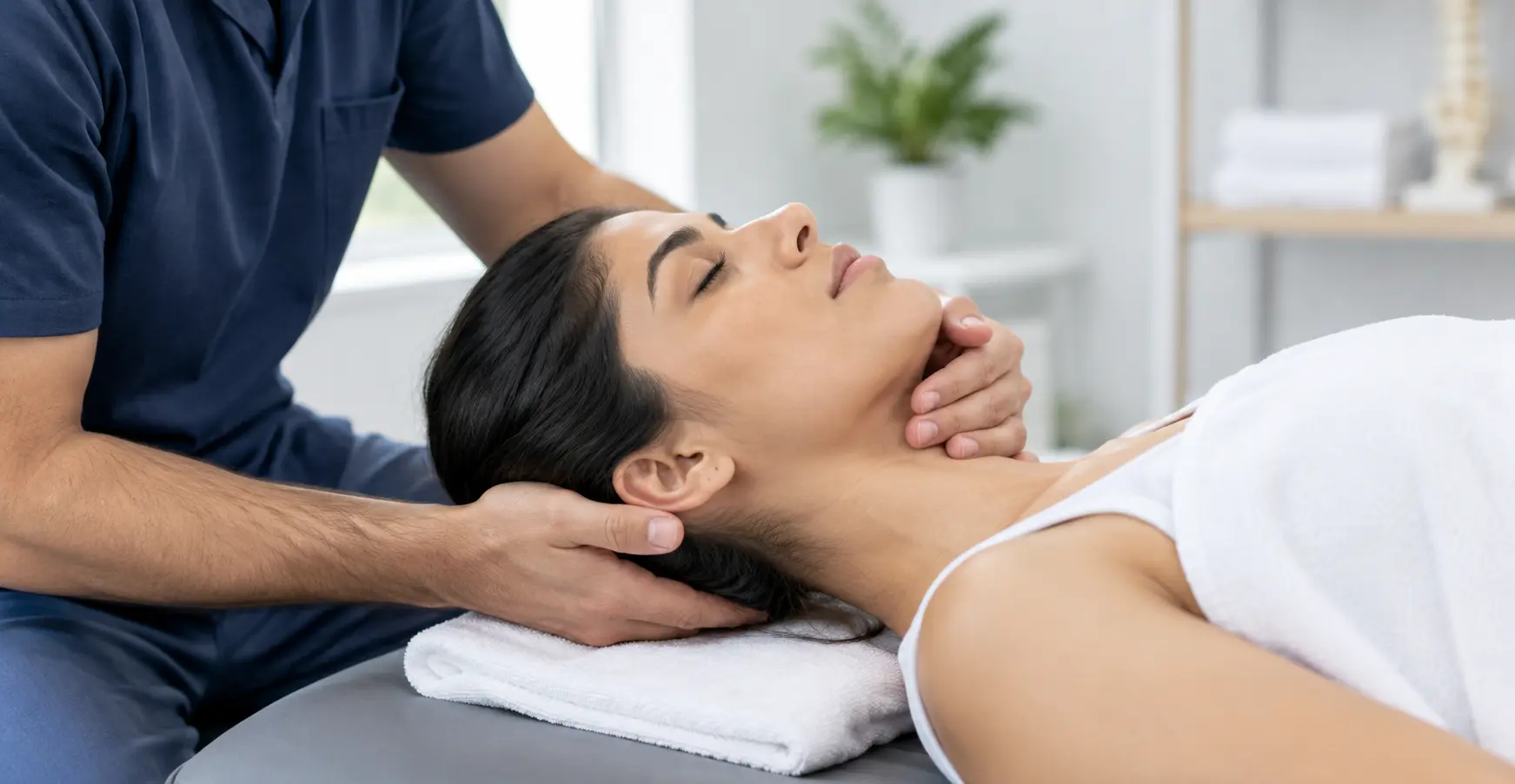
A tight, achy jaw can make everyday things like eating, talking, and yawning uncomfortable, and it often comes with headaches at the temples. For many people, tension in the jaw muscles is a big part of the problem, and that’s where TMJ massage can help.
TMJ massage is targeted massage therapy for the muscles that move your jaw, mainly at the sides of the jaw, the temples, and the neck. It can ease muscle tightness, make chewing more comfortable, and help with headaches linked to jaw clenching. It works best when muscle tension is part of the cause. Jaw pain that comes from the joint itself, or that keeps coming back, may also need a physiotherapist or dentist.
What Is TMJ?
Your temporomandibular joints (TMJs) connect your lower jaw to your skull, one just in front of each ear. Together with several muscles, they let you open and close your mouth, chew, speak, and yawn.
When people say they “have TMJ,” they usually mean a temporomandibular disorder (TMD): a problem with the jaw joints, the jaw muscles, or both. Symptoms range from tight, tired jaw muscles to clicking, limited opening, or pain near the ears.
What Is TMJ Massage?
TMJ massage is hands-on treatment for the muscles that drive jaw movement and clenching. Your RMT tailors it to your symptoms, and it commonly includes:
- Masseter: the thick muscle along the side of your jaw that does most of the work when you bite and clench
- Temporalis: the fan-shaped muscle at your temples, often the source of jaw-related headaches
- Other facial muscles around the cheeks and jaw
- Neck and shoulders, where tension often travels alongside jaw tension
Many people notice less tightness, easier chewing, and a better sense of when they’re clenching. Massage helps most when muscles are a big part of the problem. It won’t fix every jaw disorder, especially problems coming from the joint itself.
Signs Your Jaw Tension Needs Attention
- Tight, tired, or sore jaw muscles, especially in the morning
- Tenderness at the cheeks or temples
- Discomfort when chewing, yawning, or opening wide
- Pain around the jaw joint or in front of the ears
- Headaches that come with jaw tightness
- Catching yourself clenching during the day
- Clicking or popping, especially if it’s painful
Jaw clicking on its own is common and often harmless. It’s worth getting checked if it’s painful, getting worse, or comes with locking.
What Causes Jaw Muscle Tension?
Usually it’s a mix of factors rather than one cause:
- Clenching and grinding: during the day while concentrating, or at night while you sleep. A dentist can check for grinding and discuss a night guard.
- Stress: many people clench without noticing during busy or stressful periods.
- Jaw overuse: frequent gum chewing or very chewy foods can aggravate sore muscles.
- Neck and shoulder tension: long hours at a desk often go hand in hand with jaw tension, though posture alone rarely explains it.
- Joint problems: irritation, injury, or arthritis in the joint itself. These usually need assessment and treatment beyond massage.
Can TMJ Massage Help With Headaches?
It can, when jaw tension is part of the picture. A tight temporalis muscle in particular can cause aching at the temples and sides of the head, often worse after a day of clenching. Easing that tension can reduce how often or how intensely those headaches show up.
Not every headache comes from the jaw, though. Migraine, neck-related headaches, and other conditions can feel similar, so frequent or changing headaches deserve a proper assessment.
Get urgent medical care for a sudden, severe headache, or a headache with new weakness, confusion, fainting, trouble speaking, or vision changes.
What to Expect at Your TMJ Massage Appointment
- A conversation about your symptoms: where it hurts, how long it’s been going on, what makes it worse, and any assessment or treatment you’ve already had (for example, from a dentist).
- A look at how your jaw moves: your RMT checks how far and how smoothly you open, and where you’re tender in the jaw, face, neck, and shoulders. They’ll explain the plan and get your consent before starting.
- Hands-on treatment: gentle work on the jaw and temple muscles from outside the mouth, plus the neck and shoulders if they’re involved. Pressure is adjusted to you, so speak up if anything feels like too much.
- Advice for between sessions: simple ways to spot and ease clenching, and which habits to change for a while.
About intraoral (inside the mouth) techniques: some RMTs are trained to work on jaw muscles from inside the mouth, wearing gloves. It’s only done with your specific consent, and you can always say no.
TMJ Massage vs. Physiotherapy: Which Do You Need?
They do different jobs, and many people benefit from both.
TMJ Massage
Main Focus: Relieves tightness and soreness in the jaw, face, and neck muscles.
What It Includes: Hands-on soft tissue massage and awareness of clenching habits.
Best For: People experiencing muscle tension and jaw clenching.
Assessment: Evaluates muscle tension and tolerance to hands-on treatment.
TMJ Physiotherapy
Main Focus: Improves jaw joint movement, muscle function, and overall jaw mobility.
What It Includes: A detailed assessment, jaw exercises, education, and manual therapy.
Best For: People experiencing jaw clicking, locking, limited mouth opening, or recurring pain.
Assessment: Examines the jaw joint, movement patterns, and contributing factors.
Not sure which to start with? If you mostly feel tight and achy, massage is a good first step. If your jaw clicks painfully, catches, or won’t open fully, start with a physiotherapy assessment.
TMJ Care at Harmony Physiotherapy & Wellness
At Harmony in Nepean, Ottawa, our Registered Massage Therapists and physiotherapists can work in collaboration on jaw pain (with your consent). Your RMT eases the muscle tension, and if something suggests the joint is involved, our physio team can assess it.
What You Can Do at Home
- Lips together, teeth apart: when you’re not eating or talking, your teeth shouldn’t touch. Rest your tongue gently on the roof of your mouth.
- Ease up on chewing: skip gum and very chewy foods for a while if they make things worse.
- Try gentle warmth: a warm (not hot) compress on the jaw for 10–15 minutes can help tight muscles. Stop if it makes symptoms worse.
- Don’t force it: avoid stretching your jaw wide or trying to “click” it back into place.
- Notice your triggers: jot down when symptoms flare, for example during stressful work, after meals, or first thing in the morning.
When to Get Your Jaw Pain Checked
Book an assessment with a physiotherapist, dentist, or doctor if you have pain that lasts more than a few weeks, recurring headaches with jaw symptoms, difficulty chewing, or a jaw that won’t open fully.
Seek medical care promptly for a jaw injury, a jaw that’s stuck open or closed, swelling with fever, or (if you’re over 50) new temple headaches with jaw pain when chewing.
Call 911 if jaw pain comes with chest pressure, shortness of breath, sweating, or pain spreading to your arm or back. It can be a sign of a heart attack.
Frequently Asked Questions
Does TMJ massage hurt? The jaw muscles can feel tender, especially if you clench a lot, but treatment should never be more than you can comfortably tolerate. Your RMT adjusts pressure as you go.
How many sessions will I need? It varies. Many people notice a difference within a few sessions, especially when they also work on clenching habits. Your RMT will suggest a plan after your first visit.
Can massage stop jaw clicking? Not always. If tight muscles contribute to the clicking, massage may help. Clicking that comes from the joint itself usually needs a physiotherapy or dental assessment, especially if it’s painful or your jaw catches.
Should I see a dentist or a physiotherapist for TMJ pain? Start with a dentist if you suspect grinding, tooth problems, or a bite issue. Start with a physiotherapist for clicking, locking, limited opening, or pain linked to movement. Many people end up working with both.
Is TMJ massage covered by insurance? Massage by a Registered Massage Therapist is covered under many extended health plans in Ontario. Some plans require a doctor’s note for reimbursement, so check your coverage.
Do I need a referral? No referral is needed to book massage therapy or physiotherapy at Harmony Physiotherapy & Wellness.
Explore Massage Therapy in Ottawa
Jaw muscle tension can affect eating, speaking, concentration, and everyday comfort. When muscle tightness contributes to symptoms, an individualised approach may help improve comfort and support better jaw function.
If you are exploring TMJ massage in Ottawa, Harmony Physiotherapy & Wellness can help you learn more about available massage therapy services and whether they may suit your needs.
Contact Harmony Physiotherapy & Wellness to ask about TMJ-specific care and appointment availability.
Treatment suitability and outcomes vary. Persistent jaw pain, locking, or recurring headaches may require assessment by an appropriate healthcare professional.