

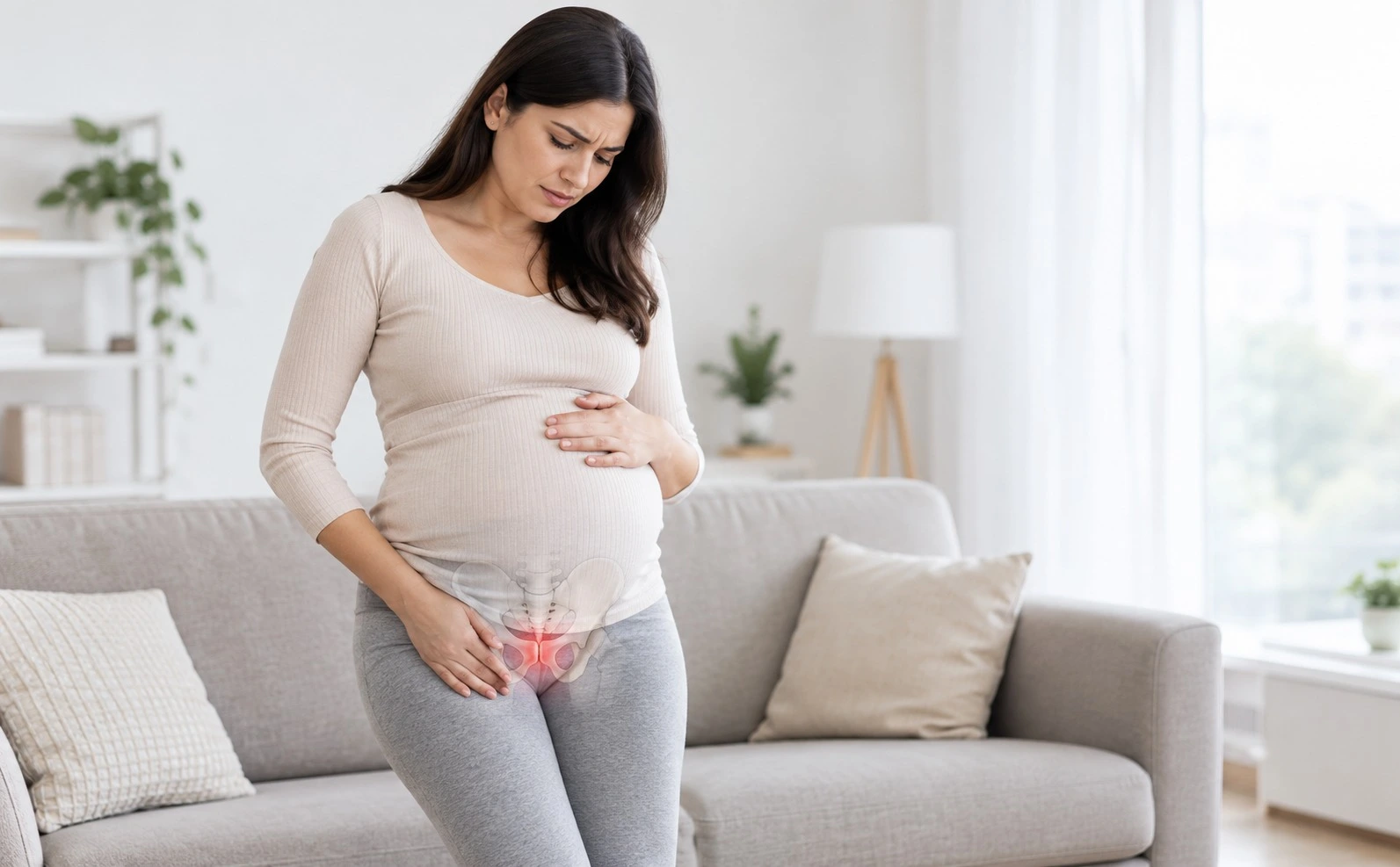
A sharp pain at your pubic bone when you roll over in bed. A catch in your groin as you step into your pants or climb the stairs. If that sounds familiar, you may have symphysis pubis dysfunction (SPD), and you’re far from alone. Pelvic pain affects roughly 1 in 5 pregnant people. It’s common, but it isn’t something you just have to put up with.
SPD is pain at the joint at the front of your pelvis (the pubic symphysis). It’s part of a broader group of pregnancy-related pelvic girdle pain (PGP). It usually hurts most when walking, climbing stairs, standing on one leg, or rolling over in bed. Keeping your knees together during movement, taking smaller steps, and getting a pregnancy physiotherapy assessment can make a real difference. It doesn’t harm your baby, and most people can still have a vaginal birth.
What Is SPD in Pregnancy?
The pubic symphysis is the joint where the two halves of your pelvis meet at the front, just above your genitals. SPD describes pain at that joint. Because pain often spreads to the back or sides of the pelvis too, many clinicians now use the broader term pregnancy-related pelvic girdle pain (PGP).
One reassuring point: SPD doesn’t mean your pelvis is damaged or “coming apart.” It’s about how your pelvis and the muscles around it are handling new loads, and that’s something we can work on.
Symptoms of SPD
- Pain at the front of the pelvis, over the pubic bone, sometimes spreading into the groin or inner thighs
- Pain when walking, especially with long strides or over longer distances
- Pain climbing stairs
- Pain rolling over in bed
- Pain standing on one leg, like when putting on pants, underwear, or shoes
- Pain getting in or out of the car
- Clicking or grinding at the front of the pelvis
- Pain in the lower back, hips, or buttocks alongside the front pain
Symptoms range from a mild twinge with certain movements to pain that limits walking, sleep, and work.
What Causes SPD?
There’s usually no single cause. Common contributors include:
- Pregnancy hormones that soften ligaments throughout the body. Everyone has these changes, though, so hormones alone don’t explain why some people get pelvic pain and others don’t.
- New loads and movement patterns as your belly grows and your posture and walking pattern change
- Repeated one-legged or wide-legged activities like stairs, lunges, long walks, or carrying a toddler on one hip
- Previous pelvic or low back pain, including in an earlier pregnancy. This raises the odds of getting it again, but it doesn’t guarantee it.
When Does SPD Start?
It can start in any trimester. Many people first notice it in the second trimester, and for others it builds through the third. Symptoms often go up and down depending on how active you’ve been.
How Is SPD Diagnosed?
Usually through a clinical assessment. A physiotherapist or doctor asks where and when it hurts, which movements set it off, and about your history, then does a few gentle movement tests. Scans aren’t usually needed unless another cause is suspected. Because other conditions can cause pelvic pain, it’s worth getting assessed rather than self-diagnosing.
Everyday Tips to Ease SPD Pain
Small changes to how you move often make the biggest difference. The general rule: keep your knees together and avoid putting all your weight on one leg.
- Rolling in bed: bend your knees, squeeze them together (a pillow between them helps), and roll your whole body as one unit. Silky pyjamas or a satin sheet make turning easier.
- Getting in and out of the car: sit down on the seat first, then swing both legs in or out together. A plastic bag on the seat helps you pivot.
- Getting dressed: sit down to put on pants, underwear, socks, and shoes.
- Stairs: take one step at a time. Lead with your less painful leg going up, and your more painful leg going down. Use the handrail.
- Walking: take shorter steps, and break long walks into shorter ones with rest stops before the pain builds.
- Sitting and standing: keep your weight even on both feet and both sit bones. Avoid crossing your legs or standing on one leg with a hip jutted out.
- Carrying: spread the load across both arms, and avoid carrying a toddler on one hip when you can.
- Activity: stay active within comfort. Swimming is great, but skip the breaststroke kick, which can aggravate the pubic joint. Avoid wide-legged positions like deep squats or lunges.
- Sleep: lie on your side with a pillow between your knees and ankles, and one under your bump.
Bed rest isn’t recommended. Gentle, comfortable activity usually does more good than staying still.
Can Exercise Help With SPD?
Yes, the right exercise can help. There’s no single routine that suits everyone, though. A movement that feels great for one person can flare another’s pain. A physiotherapist usually starts with gentle strengthening for the hips, glutes, and deep core, done in a pain-free range, then progresses as you improve.
A common myth: Kegels aren’t a cure for SPD. Pelvic floor function can be part of the picture, but some people with pelvic pain actually have tense pelvic floor muscles that need to relax, not squeeze more. That’s why an individual assessment matters. Avoid pushing through sharp pain, deep stretches, or wide-legged moves.
Do Pelvic Support Belts Help?
They can. A pelvic support belt, worn low around the hips, helps many people feel more stable during walking and standing. It works best alongside exercise rather than instead of it. Your physio can check whether one suits you and show you how to fit it properly.
How Pregnancy Physiotherapy Helps SPD
At Harmony, our pregnancy physiotherapists and pelvic health physiotherapists treat SPD and pelvic girdle pain regularly. Your plan may include:
- Assessment: which movements hurt and why, plus a check of your pelvis, hips, back, and pelvic floor
- Hands-on treatment to ease pain and muscle tension
- Exercises tailored to your symptoms and stage of pregnancy
- Movement coaching for stairs, dressing, sleep, and work
- Support options like a pelvic belt, or in more severe cases, crutches for short periods
- Birth and postpartum planning so you know what to expect
Many people feel more in control within a few visits, even if the pain doesn’t disappear completely until after birth.
Does SPD Affect Labour and Birth?
For most people, SPD doesn’t stop you from having a vaginal birth, and it isn’t a reason on its own for a caesarean. A few things help:
- Tell your midwife or obstetrician about your SPD ahead of time, and note it in your birth plan.
- Know your comfortable range. Sitting or semi-reclined with your knees bent, gently open your knees as far as is comfortable and have your partner measure the gap. Share it with your care team so your legs aren’t pushed wider than that, especially if you have an epidural and can’t feel pain.
- Try upright or side-lying birth positions, or on all fours, which often put less strain on the pubic joint than lying on your back with legs wide apart.
How Long Does SPD Last After Birth?
For many people, SPD eases within days to weeks of giving birth. For some it lingers for months. If pain is still affecting walking, lifting, or caring for your baby after birth, don’t just wait it out. Postpartum physiotherapy can help you recover.
When to Seek Medical Help
Not all pelvic pain in pregnancy is SPD. Contact your doctor, midwife, or labour and birth unit right away if you have:
- Sudden or severe pelvic or abdominal pain
- Vaginal bleeding or leaking fluid
- Regular painful contractions or cramping before 37 weeks
- Fever, or feeling very unwell
- Sudden inability to bear weight or walk
For pelvic pain that is ongoing, getting worse, or making daily life hard, book an assessment with your provider or a pregnancy physiotherapist.
Frequently Asked Questions
Is SPD dangerous for my baby? No. SPD is a musculoskeletal condition affecting your pelvis, not your baby. Do get any new, severe, or unusual pelvic pain checked, since other conditions can cause similar pain.
Can SPD start in the second trimester? Yes. It can start in any trimester, and the second trimester is a common time for it to begin.
Should I keep walking if I have SPD? Yes, within comfort. Take shorter steps, walk shorter distances, and rest before the pain builds. If walking becomes very painful or you can’t bear weight, get assessed.
Are Kegels good for SPD? Not on their own. Some people with pelvic pain need to relax their pelvic floor rather than strengthen it. A pelvic health physiotherapist can tell you which applies to you.
Can a pregnancy support belt help SPD? Often, yes. A pelvic belt worn low around the hips helps many people walk and stand more comfortably. A physio can help you choose and fit one.
Will SPD go away after delivery? For most people it improves within days to weeks after birth. If it doesn’t, postpartum physiotherapy can help.
Will I need a caesarean because of SPD? Usually not. Most people with SPD have a vaginal birth. Talk to your care team about comfortable positions and your pain-free knee range.
Do I need a referral for pregnancy physiotherapy? No. You can book directly with Harmony Physiotherapy & Wellness. Many extended health plans cover physiotherapy, so check your coverage.
Get Support for SPD in Pregnancy in Ottawa
SPD and pregnancy-related pelvic girdle pain can make everyday movements challenging, from walking and climbing stairs to turning over in bed. Identifying the activities that aggravate your symptoms and learning suitable movement strategies may help you manage discomfort.
Harmony Physiotherapy & Wellness provides pregnancy and pelvic health physiotherapy services in Ottawa and Nepean. If pelvic pain is affecting your daily activities, explore Pregnancy Physiotherapy or contact the clinic to discuss whether an assessment may be appropriate.
This article provides general educational information and does not replace individual medical advice, diagnosis, or pregnancy care.