

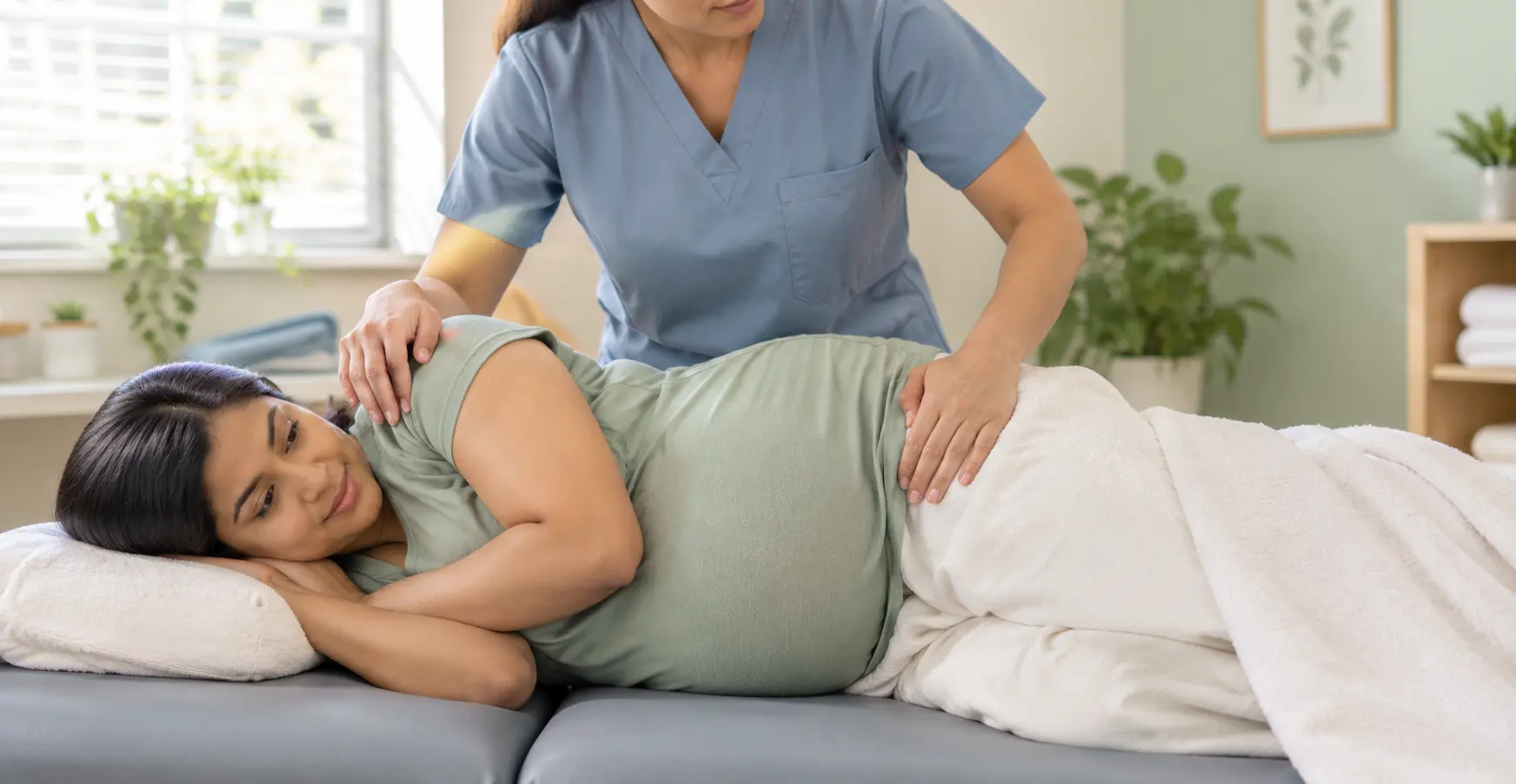
Pregnancy asks a lot of your body. By the second or third trimester, much of that shows up as back pain, hip tightness, or swelling that just won’t quit. Prenatal massage is one of the most requested treatments among our pregnant clients in Nepean, Ottawa, and the question we hear most is simple: is it actually safe?
Quick answer: Yes. Prenatal massage is safe for most pregnancies when it’s done by a Registered Massage Therapist (RMT) trained in pregnancy care. It uses adjusted pressure and supportive positioning, usually side-lying rather than face-down, to ease pregnancy-related tension without pressure on your belly. If your pregnancy is high-risk, check with your doctor or midwife before booking.
What Is Prenatal Massage?
Prenatal massage is massage therapy adapted for pregnancy. It isn’t a regular massage with a pillow added. Positioning, pressure, and technique are all chosen with pregnancy changes in mind, such as fluid retention, shifting posture, and looser ligaments (from the hormone relaxin).
RMTs trained in prenatal care know how to position you safely, which areas need a lighter touch (for example, gentle work only on the legs), and how to adapt as your body changes across all three trimesters.
Benefits of Prenatal Massage
- Eases lower back and hip pain from shifting posture and added weight
- Can help with everyday swelling and heaviness in the legs and feet
- Relieves neck and shoulder tension from postural changes
- May help you sleep better, which often suffers in later pregnancy
- Offers a moment of calm during a physically demanding time
Is Prenatal Massage Safe in Every Trimester?
First Trimester (up to Week 13): Many Registered Massage Therapists (RMTs) take a more conservative approach during the first trimester. Since pregnancy loss is more common during this period for reasons unrelated to massage, gentle techniques are generally preferred. Always inform us that you are pregnant when booking your appointment, even in the early weeks.
Second Trimester (Weeks 14–27): The second trimester is often the most comfortable time to begin prenatal massage. Nausea has usually subsided, and you can generally move and change positions more easily, making it a suitable time to enjoy the benefits of massage.
Third Trimester (Week 28 to Birth): During the third trimester, prenatal massage may help relieve discomfort in the hips and back, as well as swelling that can increase as your due date approaches. Massage techniques and positioning are adjusted to accommodate your growing belly and ensure your comfort throughout the session.
If you have a high-risk pregnancy, are on modified activity or bed rest, or have been told to avoid certain activities, check with your doctor or midwife before booking.
What week should you start?
There’s no official cutoff. Many people start in the second trimester. If you’re earlier and want a massage, talk to your RMT. Some are comfortable treating earlier with gentle, conservative techniques when there are no complications.
Is 38 weeks too late?
No. For uncomplicated pregnancies, prenatal massage is generally fine right up to your due date, with positioning and pressure adjusted for comfort. Many clients find it especially helpful in the final weeks.
When to Skip Your Massage and Call Your Provider
Cancel your appointment and contact your doctor or midwife (or go to hospital) if you notice:
- Vaginal bleeding or leaking fluid
- Regular contractions or cramping before 37 weeks
- Sudden swelling of your face or hands, especially with a headache or vision changes
- Pain, warmth, or swelling in one calf or leg
- Fewer baby movements than usual
- Fever, or feeling unwell
We’re always happy to reschedule. Your safety comes first.
How Is Prenatal Massage Different From Regular Massage?
The biggest differences are positioning and pressure. Instead of lying face-down, you’ll usually lie on your side, supported by pillows and bolsters. Later in pregnancy, lying flat on your back can make some people dizzy or lightheaded, so if you prefer to face up, you’ll be semi-reclined with a wedge under one side. Pressure is adjusted to your comfort, and leg work stays gentle because clot risk is higher during pregnancy.
What to Expect at Your Appointment
- Health history intake: Your RMT asks about your pregnancy, due date, and any complications or restrictions from your care provider.
- Comfortable positioning: Side-lying with pillow support is most common. Ask for a break to change position or use the washroom any time.
- Targeted work: Focused on what’s bothering you most, usually the lower back, hips, shoulders, and legs.
- Ongoing check-ins: Your therapist checks your comfort throughout and adjusts pressure and position as needed.
Prenatal Massage at Harmony: Massage and Pregnancy Physiotherapy Together
Many of our prenatal massage clients also see our pregnancy physiotherapy team for pelvic girdle pain, pubic bone (symphysis) pain, or labour preparation. The two complement each other: physiotherapy works on movement, strength, and pelvic floor preparation, while massage helps with muscle tension and comfort along the way.
Our Registered Massage Therapists in Nepean, Ottawa are trained in safe positioning and technique for every stage of pregnancy. Because Harmony is also a pelvic health clinic, your RMT and physiotherapist can coordinate your care (with your consent).
After your baby arrives, we’re here for that stage too. Read about postpartum massage, or explore all our massage therapy services. No referral is needed to book.
Frequently Asked Questions
Is it safe to get a massage while pregnant? Yes, for most pregnancies, when it’s done by an RMT trained in prenatal care. Always mention your pregnancy and any care-provider restrictions when booking.
At what week should I start prenatal massage? There’s no official cutoff. Many RMTs take a more cautious approach in the first trimester (up to about week 13), and the second trimester is often the most comfortable time to start.
Is 38 weeks too late for prenatal massage? No. For uncomplicated pregnancies, it’s generally fine right up to your due date, with positioning adjusted for comfort.
Do I need my doctor’s approval before booking? Most uncomplicated pregnancies don’t need it. If your pregnancy is high-risk or you have activity restrictions, check with your doctor or midwife first.
How is prenatal massage positioning different? You’ll usually lie on your side with supportive pillows rather than face-down, so there’s no pressure on your belly.
Can prenatal massage help with sciatica during pregnancy? It can ease muscle tension in the low back, hips, and glutes. Much of the “sciatica” in pregnancy is actually pelvic girdle pain, which responds well to pelvic health physiotherapy. Persistent or worsening nerve pain should be assessed by a physiotherapist or doctor.
Is prenatal massage covered by insurance? Massage by an RMT is covered under many extended health plans in Ontario. Some plans require a doctor’s note for reimbursement, so check your coverage.
Where can I find pregnancy massage in Ottawa? Look for Registered Massage Therapists with prenatal training in safe positioning for every trimester. At Harmony Physiotherapy & Wellness in Nepean, our RMTs work alongside our pregnancy physiotherapy team, so your care is coordinated rather than separate.
Book Your Prenatal Massage in Nepean, Ottawa
Contact Harmony Physiotherapy & Wellness in Nepean, Ottawa to schedule your prenatal massage appointment.
This information is for educational purposes only and is not medical advice. Please consult your doctor, midwife, or qualified healthcare provider about what is appropriate for your pregnancy.